


Table Of Contents
Painting an aged care facility is not like painting a standard commercial building. The residents are among the most vulnerable members of the community, many with chronic health conditions, respiratory sensitivities, and reduced mobility. Every decision made during a painting project, from product selection to scheduling to site management, must be guided by their safety and comfort.
This blog post explores essential safety considerations that must be addressed before, during, and after the painting process. Let's dive in!
Environmental Assessment Before Work Begins
A thorough site assessment is the essential first step. Before any painting commences, the facility should be evaluated for:
- Asbestos — older buildings may contain asbestos in walls, ceilings, or other materials that could be disturbed during surface preparation; a licensed asbestos assessment must be completed before any work proceeds
- Ventilation — identify areas with limited airflow that will require additional ventilation management during painting
- Resident movement pathways — assess how residents, staff, and contractors will move through the facility without creating hazards or coming into contact with work areas
- Walking surfaces and trip hazards — clear all walkways of equipment, drop cloths, and materials that could cause falls

Selecting the Right Paint Products
In an aged care environment, product selection is a health decision as much as an aesthetic one.
- Low-VOC and zero-VOC paints are essential — VOCs released during painting and drying can cause respiratory irritation, headaches, and discomfort, particularly for residents with chronic health conditions or compromised lung function
- Low-odour formulations minimise disruption to residents and reduce the time before areas can be safely reoccupied
- Quick-drying products reduce the duration that spaces are out of service, supporting faster return to normal use
- Washable, durable finishes in high-contact areas reduce the frequency of future repainting, minimising repeated disruption over time
Scheduling to Minimise Resident Disruption
Thoughtful scheduling is one of the most important safety and wellbeing measures in an aged care painting project.
- Plan works during periods of lower resident activity — when residents are in communal areas, on outings, or during quieter times of day
- Use a phased approach — completing the project in sections ensures the facility remains operational throughout, with residents always having adequate living and circulation space
- Coordinate closely with facility management, care staff, and housekeeping to align the painting schedule with the residents' daily routines
- Avoid disruptive noise and fumes during rest periods and mealtimes
Ensuring proper ventilation

Ventilation is critical in any painting project but carries heightened importance in aged care environments.
- Use mechanical ventilation — fans and air movers positioned to direct fumes away from resident areas and towards outdoor vents
- Open windows and external doors wherever safe and practical to facilitate natural air exchange
- Establish containment zones using plastic sheeting and temporary barriers to isolate work areas and prevent fumes from spreading to occupied spaces
- Monitor air quality using VOC sensors in active work areas and adjacent resident spaces, particularly where residents with respiratory conditions are present
Note: Proper ventilation planning complies with health regulations, protects the residents' health, and ensures the facility remains safe during renovations.
Communicating with staff and residents
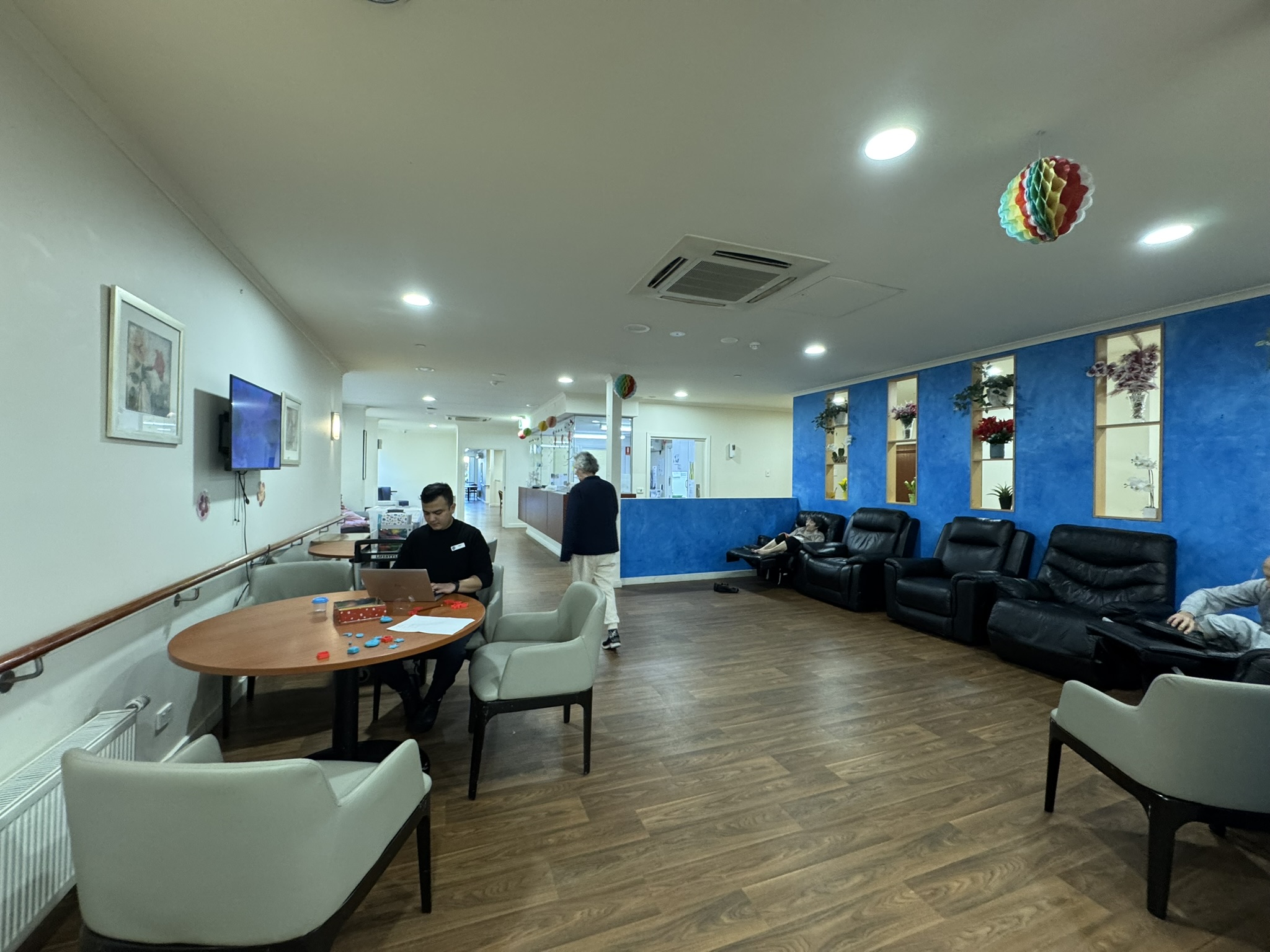
Clear and effective communication with facility staff and residents about the painting schedule, safety measures, and expected outcomes is essential to alleviate concerns and ensure cooperative efforts. Communication strategies might include:
- Pre-Project Meetings: Before the project begins, hold meetings with facility staff and key resident representatives to discuss the scope, timeline, and procedures for the painting project.
- Regular Updates: Provide regular updates through emails, newsletters, or dedicated meetings to keep all parties informed of the progress and any changes to the schedule.
- Visible Signage: Place signs around the facility detailing the painting schedule, areas affected, safety advice, and whom to contact with concerns, helping to reduce anxiety and confusion.
- Feedback Mechanisms: Establish clear channels for staff and residents to provide feedback or express concerns about the painting project. This can include direct lines to project managers or comment boxes.
Note: Effective communication not only facilitates smoother operations but also helps to build trust and reassurance among residents and staff, contributing positively to the overall atmosphere in the facility.
Handling emergencies and unexpected issues

Despite thorough planning, emergencies and unexpected issues can arise during a painting project in an aged care facility. Being equipped to handle these situations is crucial to ensure the safety and well-being of all residents. Preparedness strategies include:
- Emergency Response Plan: Develop a comprehensive emergency response plan specific to the painting project, detailing steps for evacuation, handling spills, and dealing with fume inhalation incidents.
- Training: Train staff on emergency procedures and the specific risks associated with painting materials. Ensure all staff know how to use safety equipment and whom to contact in emergencies.
- Regular Drills: Conduct drills to ensure staff and residents are familiar with emergency protocols, such as evacuations or shelter-in-place orders.
- Communication Tools: Equip staff with walkie-talkies or emergency alert systems to quickly disseminate information in an emergency.
Note: By implementing these preparedness strategies, aged care facilities can ensure a speedy and efficient response to emergencies, minimising risks to residents and staff and preventing minor cases from escalating into serious problems.
Post-painting care and maintenance
After a painting project in an aged care facility is completed, the focus shifts to the care and maintenance of the newly painted areas. Proper post-painting care ensures that the paint lasts longer, maintains its aesthetic appeal, and provides a safe environment for residents.
Here are some practical tips for the care and maintenance of freshly painted surfaces:
Proper curing time
It's crucial to understand that paint must cure fully, even after it feels dry. Depending on the type of paint used, curing can take anywhere from a few days to several weeks. To prevent marks and damage, avoid cleaning or rubbing the walls during this period.
Gentle cleaning techniques
Once the paint has fully cured, regular cleaning can help maintain its appearance. Use soft cloths and sponges with mild, soapy water to wipe down walls gently. Avoid using abrasive materials or strenuous chemical cleaners, which can strip paint and decrease lifespan.
Regular inspections
Schedule regular inspections of painted surfaces to identify issues like chipping, cracking, or peeling early on. Addressing these problems promptly can prevent more extensive deterioration and preserve the integrity of the paintwork.
Maintain indoor air quality
Ensure that rooms remain well-ventilated even after painting is complete. Continuous airflow helps disperse residual fumes and improves indoor air quality, especially in aged care settings.

Professional Aged Care Facility Painting in Melbourne
Ensuring a safe painting environment in sensitive settings such as aged care facilities is best achieved with the guidance of a professional painter.
Avello Group has extensive experience delivering painting projects in aged care and healthcare environments across Melbourne. We understand the sensitivity, care, and logistical precision these settings require — and we operate with the professionalism and discretion that residents and facility managers deserve.
For a free consultation or onsite assessment, get in touch with our team today.
Free Building Assessment
Ready to protect your building?
Avello Group provides specialist commercial painting and building maintenance across Melbourne, Sydney and Brisbane. Start with a free site assessment — we'll inspect your building and give you a clear scope and cost estimate.